
Collector's Corner Sales
ON-SITE: October 12 update: Although officially closed, volunteers will continue to staff the Sales Terrace as long as the beautiful autumn planting weather holds. M/W/F, 10:00 AM - 2:00 PM. Closed Saturdays until April 2027.
ONLINE
Select your clematis from the list below and send your order to FRCCsales@gmail.com
Include your name, phone number, name(s) of the clematis you’d like to buy, quantity of each, and the date you will pick up your order (Mon/Wed/Fri, 10am-2pm). We will respond within 12 hours by email confirming availability and sending an invoice for online payment. After receiving payment confirmation, we will send pick-up instructions. Plants can be held up to two weeks; after that your order will be cancelled.
Prices are $45 for a fully-rooted, 1-gallon specimen, and $55 for clematis in 2-gallon pots.
We do not ship plants.
Visit CLEMATIS CARE for information sheets on planting and pruning clematis.
Available Now (inventory updated 12 October, 2026)
Clematis afoliata
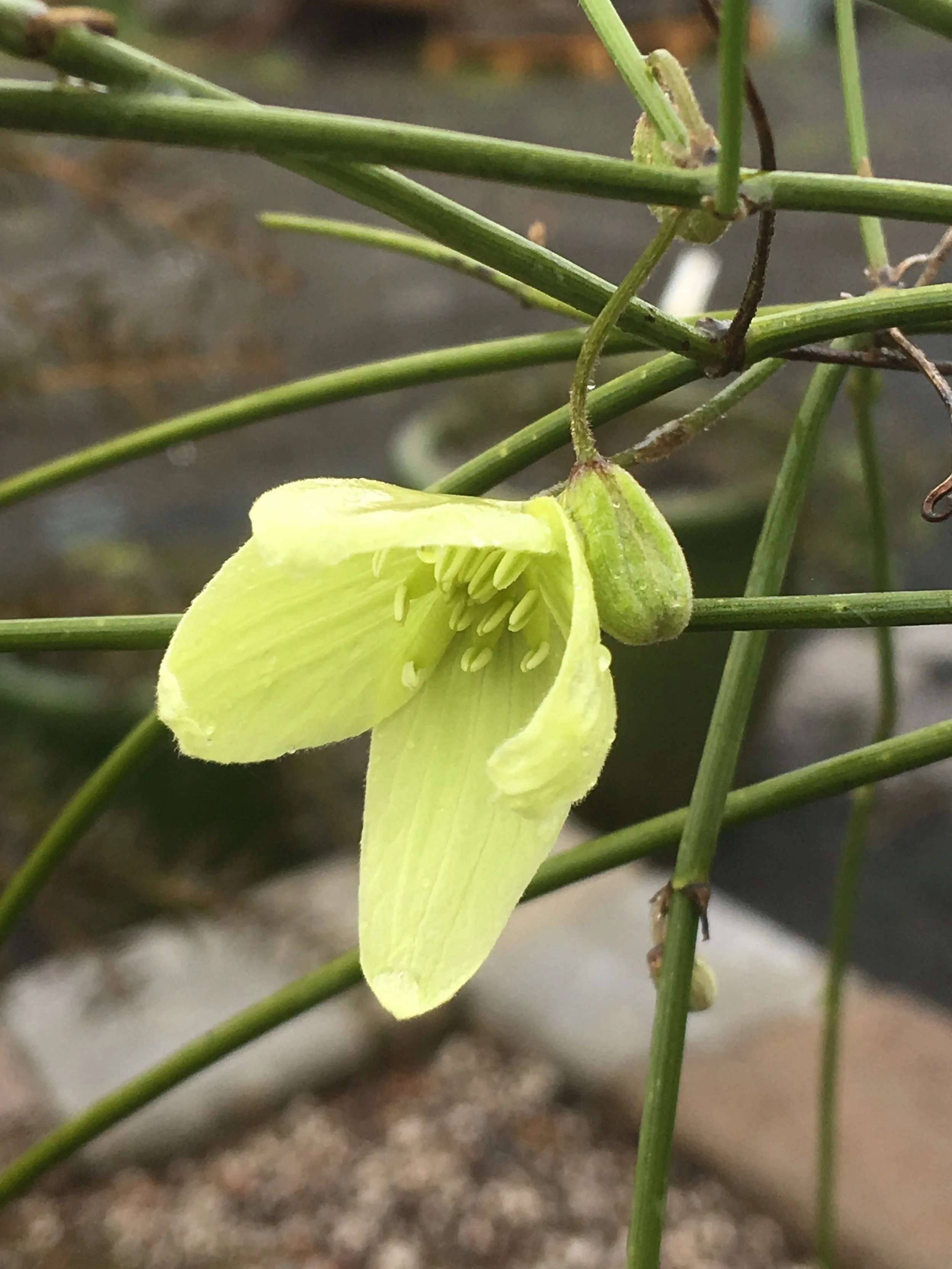
Clematis afoliata is unique among clematis in having no leaves! It does form petioles (leaf stems) and can climb—after a fashion—but in the wilds of the South Island of New Zealand you will find it in moist meadows lolling over and blending in with tussock grasses. It co-evolved with the now extinct Moa, flightless and ravenous birds with species reaching 3 meters tall! To avoid predation, C. afoliata abandoned growing leaves, and all photosynthesis happens in the bright green round stems, hence the common name, rush-stemmed clematis. It flowers early (March-April) with 1” yellow bells, highly scented of honey. The plants are either male or female. These specimens are grown from cuttings from a specimen that has not flowered, so we do not know the sex. We have 3 one-gallon plants at $45 each.
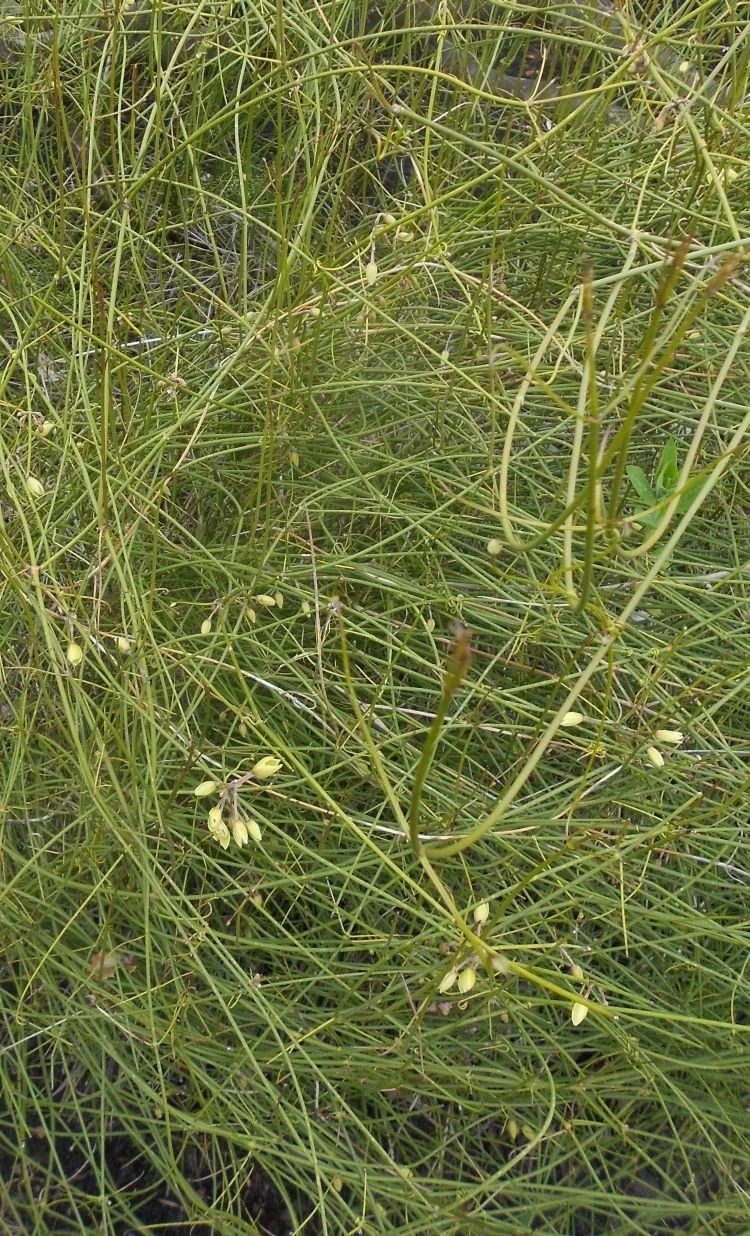
Clematis afoliata getting ready to flower in the wild. Mature plants look like a loose haystack.
Clematis alternata
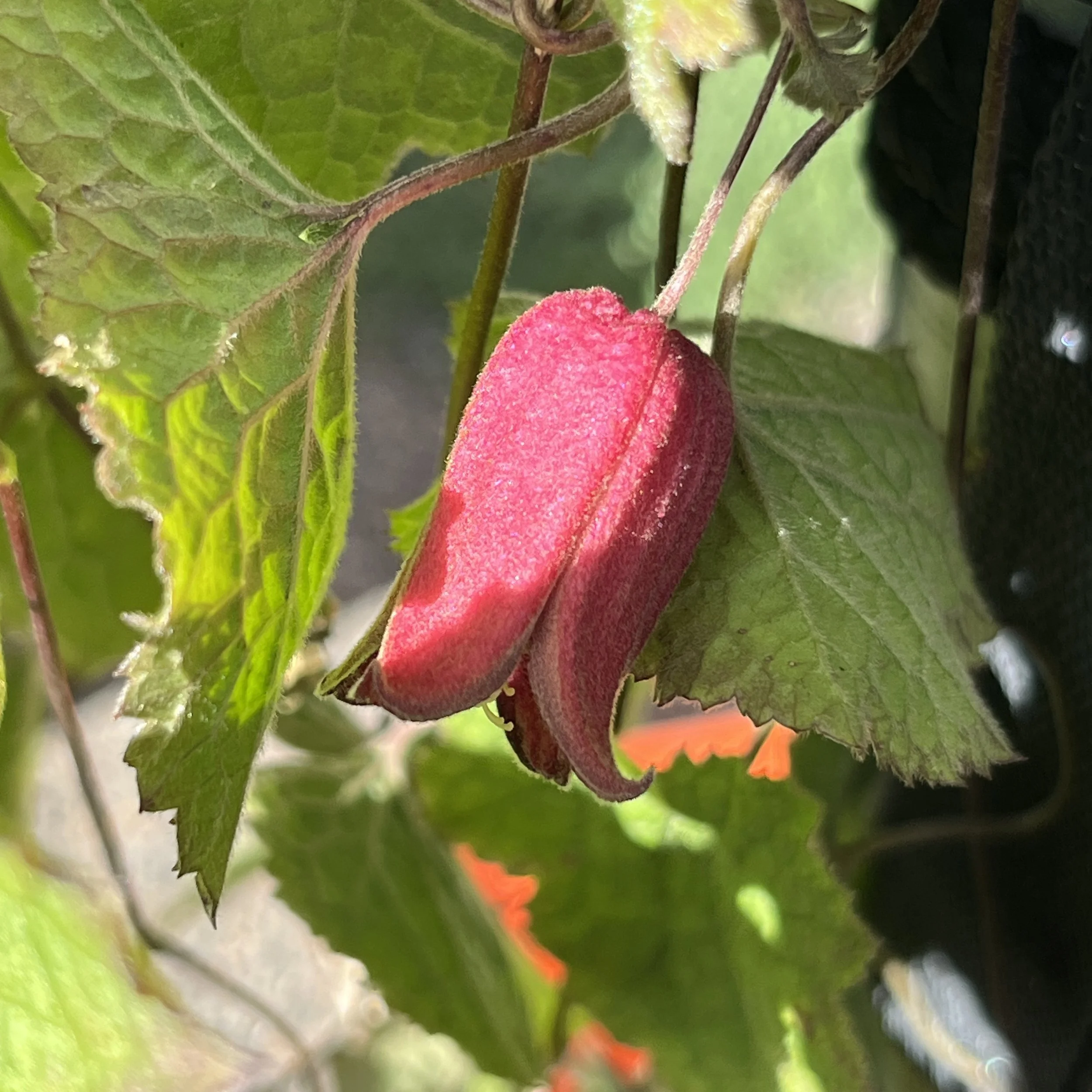
We are delighted to offer the only alternate-leaved species in the genus, the aptly named Clematis alternata. Each node is one-sided, and produces one serrated and hirsute leaf. This vine can reach 10-15’ tall, and is best displayed upright, so you can look up into the charming red bells (as you see here, also covered with a glistening layer of transparent fuzz). Sadly, we have to admit that although allegedly hardy to Zone 8, we have had never had plants survive well in the ground, so our stock plants are in 5-gallon pots we haul in and out of the greenhouse with the change in seasons. Summer blooming. This is a unique species every clematis collector must have! These are grown from cuttings. We have four 1-gallon plants available for $45 each.
Clematis beadlei
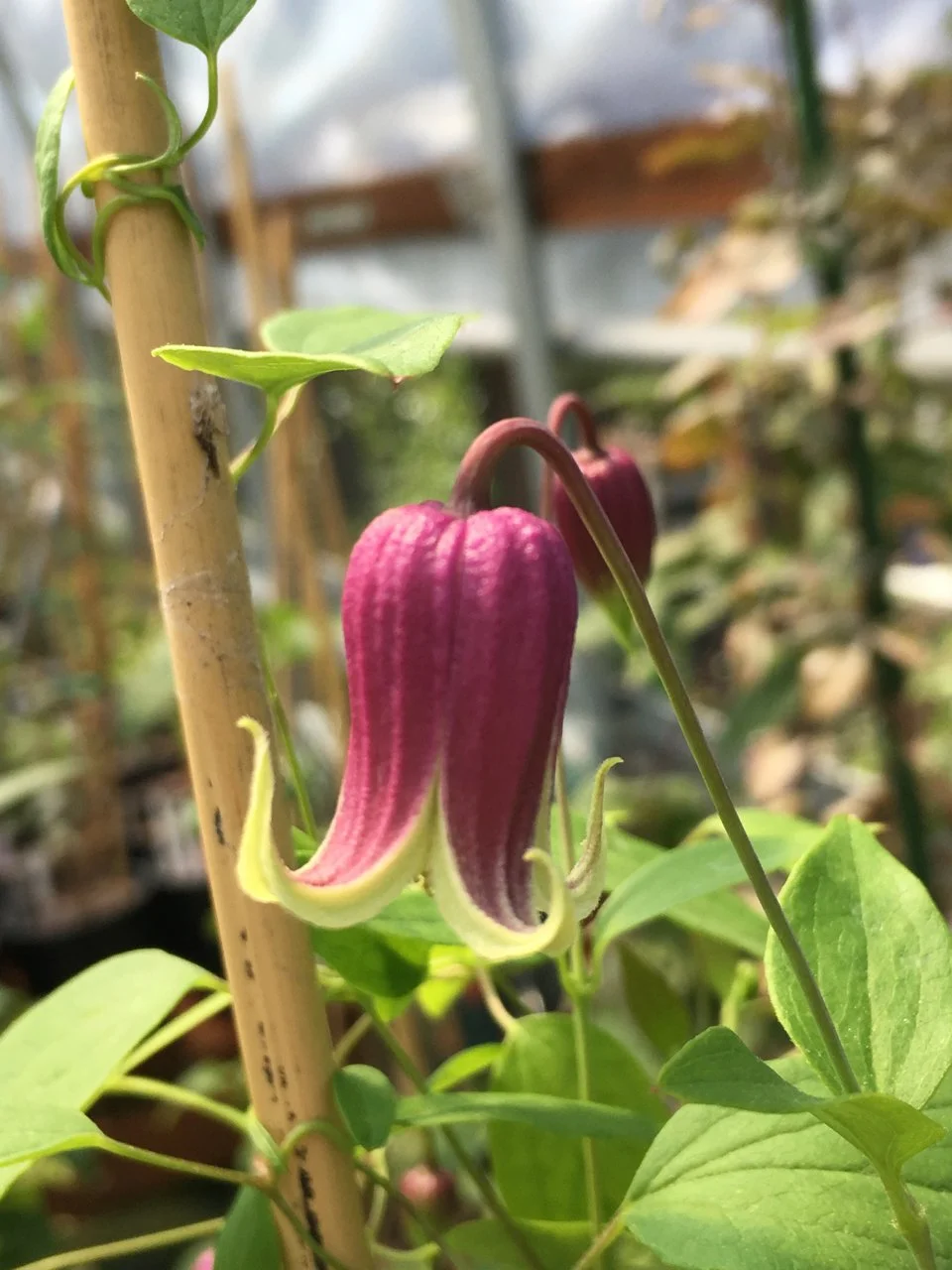
TEMPORARILY SOLD OUT This charming species is native to the state of Georgia. It is summer blooming. This is considered a herbaceous vine, meaning that it goes completely dormant in late autumn, and rejuvenates entirely from the ground each spring, so hard pruning once it is dormant in late autumn is the way to prune. Partial shade is ideal, but tolerates full sun with sufficient water. We have just potted up a few more seedlings, but we cannot say how long it will take them to develop saleable root systems.
Clematis fremontii
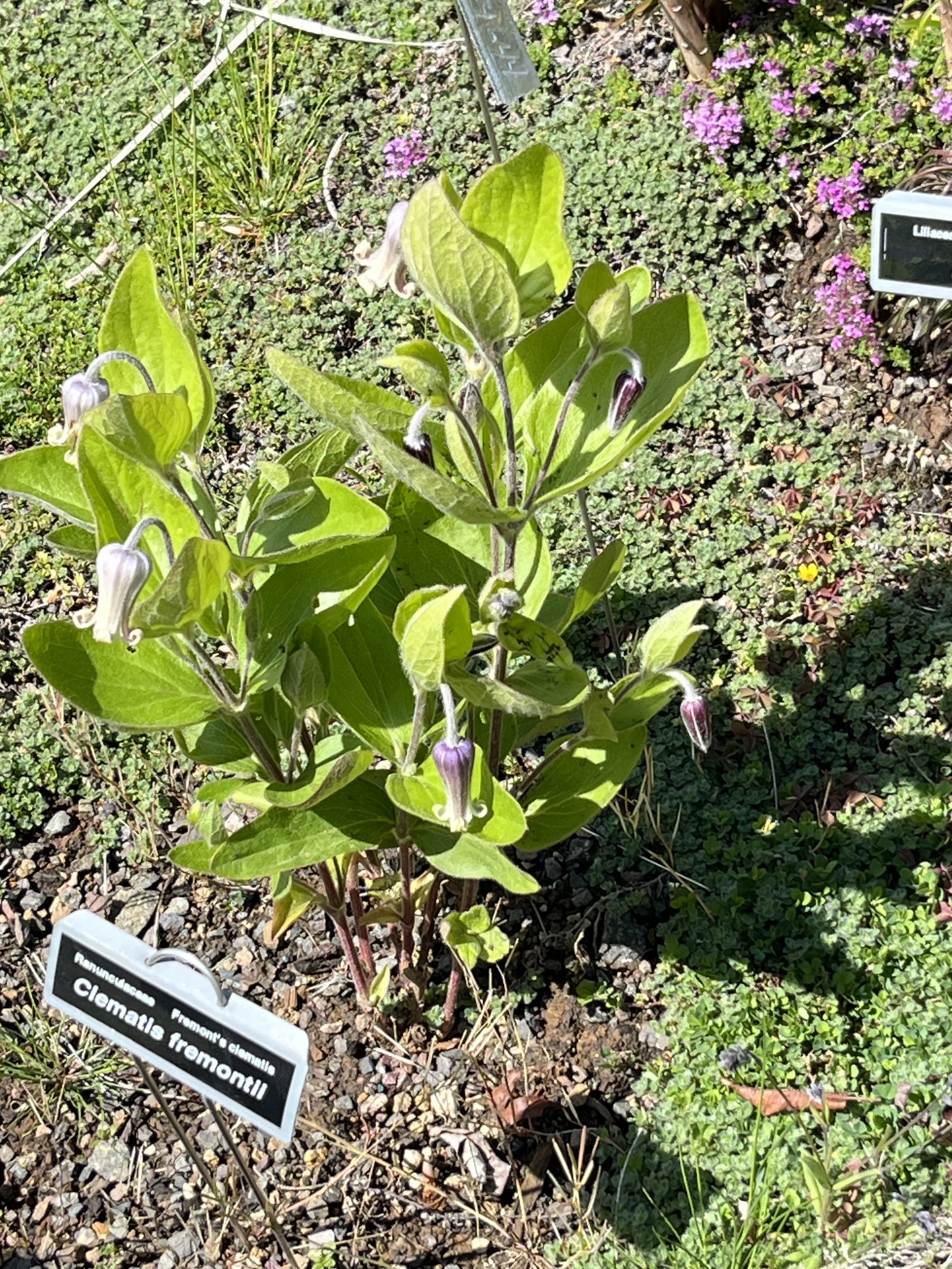
SOLD OUT FOR THE SEASON The American herbaceous perennial species C. fremontii we offer are all derived from the midwest populations (Kansas and Nebraska). There are small, separate populations in the state of Georgia, but we don’t have a seed source for them. These plants have done well on our Front Bank in full sun and quarter-ten gravel mulch with pumice in the planting hole for drainage.
Clematis fusca
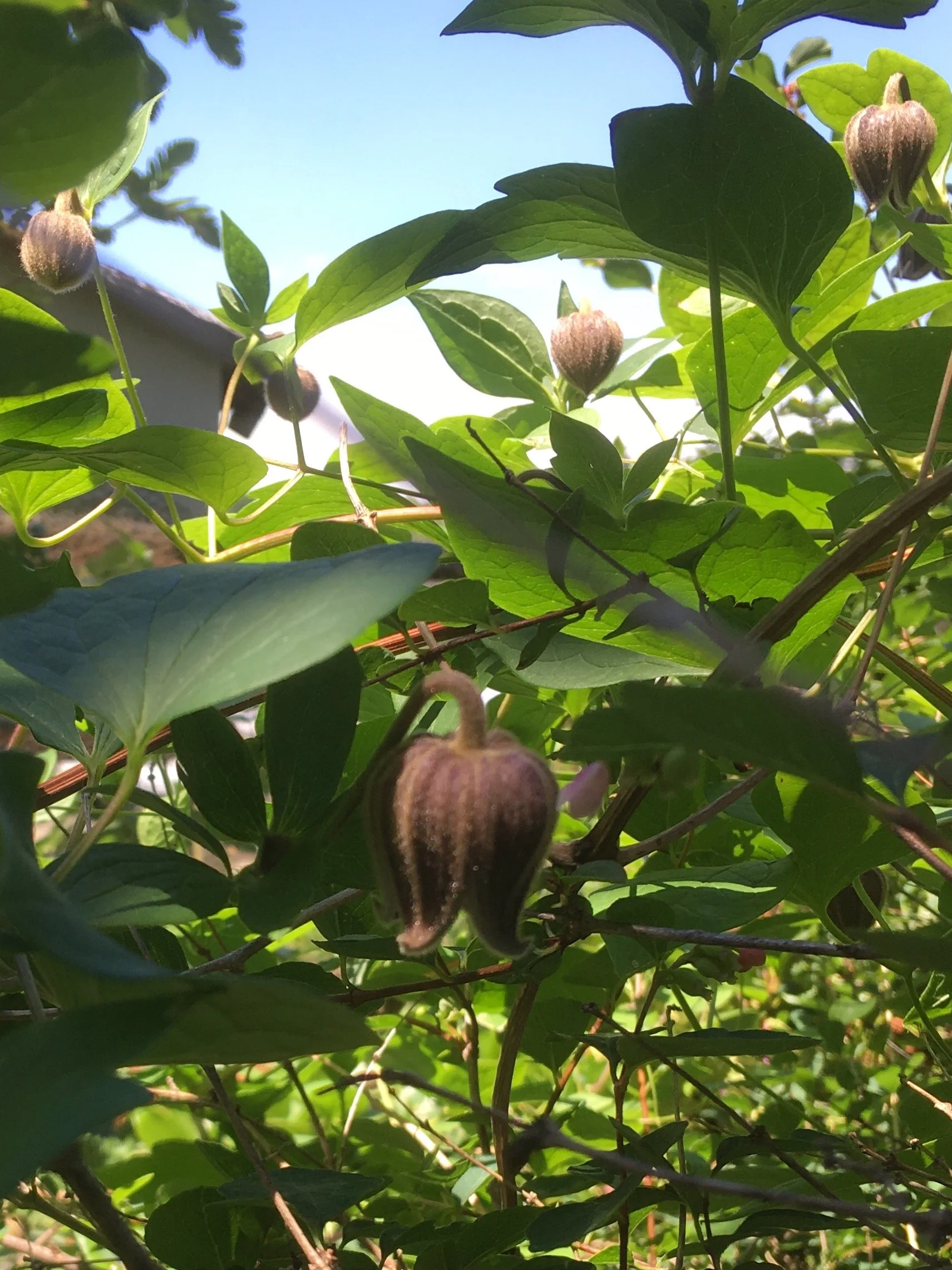
SOLD OUT FOR THE SEASON Clematis fusca is native to Japan and many other areas in eastern Asia. It is somewhat variable, but consistently has thick brown fuzz. It may show an interior that is light lavender, cream, or green. It crosses readily with Clematis ianthina, so we always flower these plants before sale so we are able to describe the color and verify the species. These are definitely brown. This is a woodland edge species, best placed with afternoon shade wandering through shrubs.
‘Shibori Blue’
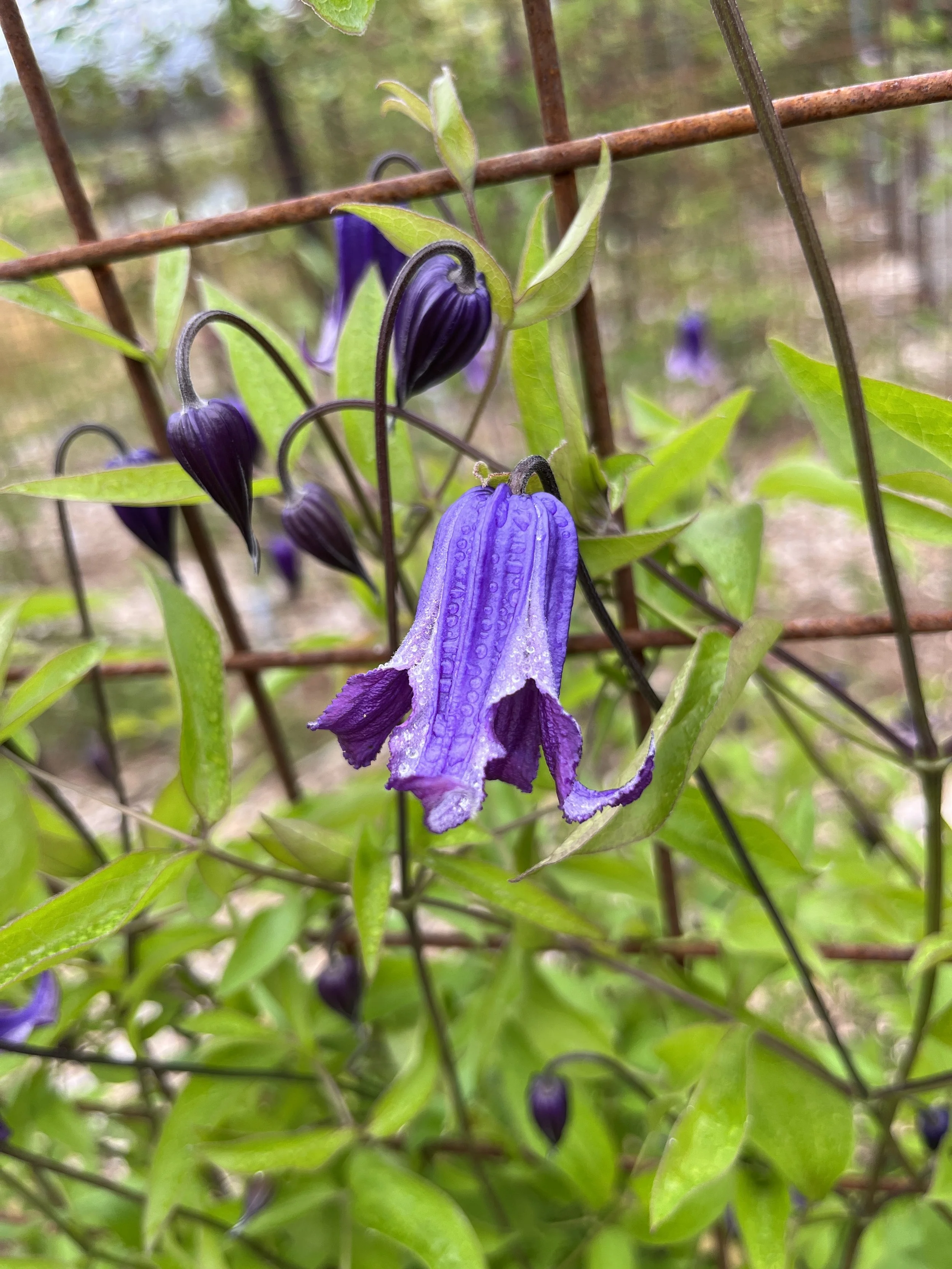
‘Shibori Blue’ is a hybrid created by Maurice Horn by back-crossing ‘Roguchi’ with itself. The result is a much more mildew-resistant plant with wavier flowers with excellent depth of color. ‘Shibori Blue’ is a reluctant climber to 6’ tall, free flowering, and reblooms quickly if cut to the ground in mid-July when the first wave of flowers is mostly gone to seed. It was trialed for three years at the Rogerson Clematis Garden in full sun with regular irrigation. It was hard pruned to 2-3 inches tall in mid-January (or once winter dormant) and again in mid-July to promote rebloom. We have 4 1-gallon plants available now at $45 each.
Clematis socialis
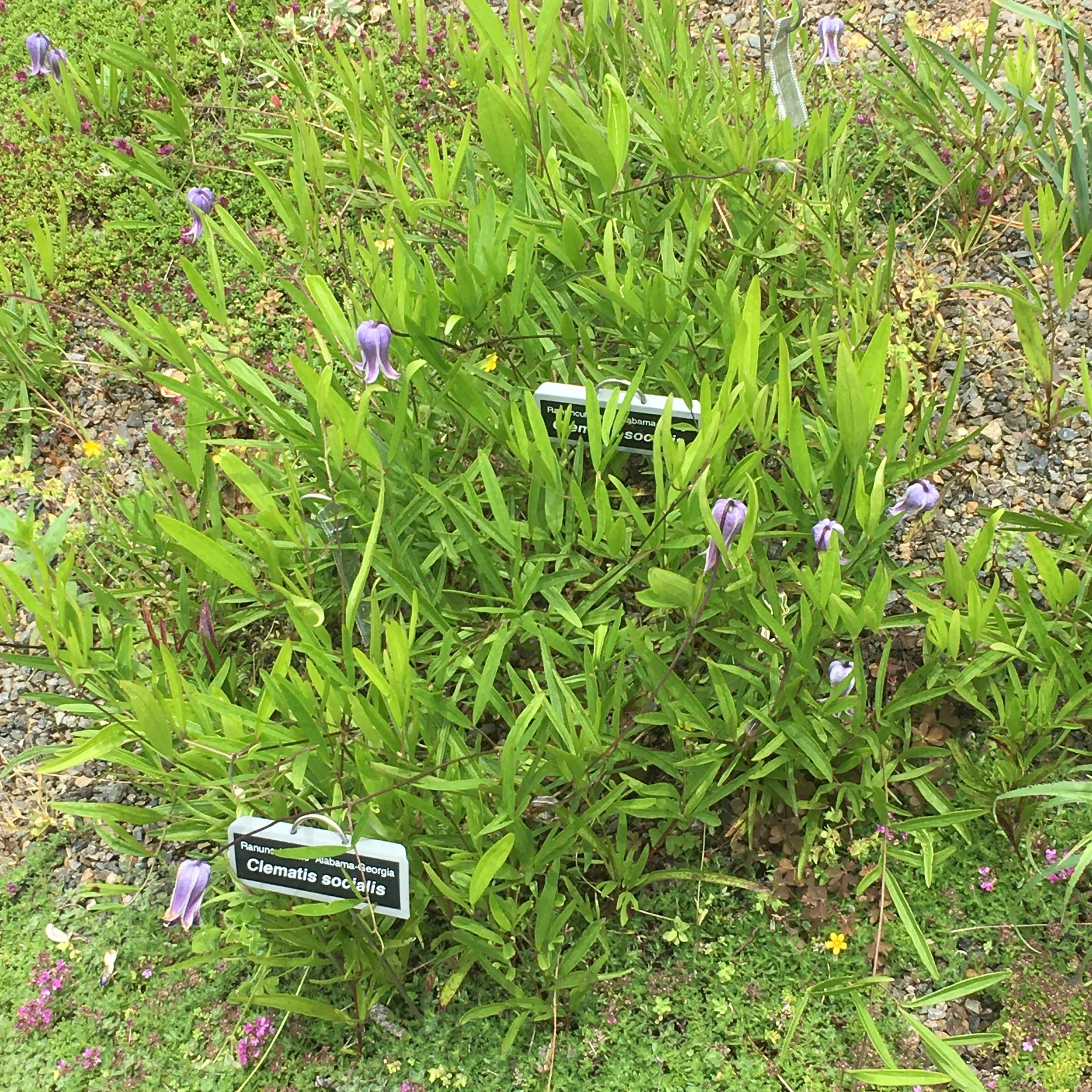
SOLD OUT FOR THE SEASON Clematis socialis is a colony forming herbaceous perennial clematis, non-climbing. In the wilds of Alabama and Georgia it lives in meadows with native grasses and other wildflowers. We grow it in full sun with a groundcover of creeping thymes (several forms including wooly thyme and T. minimus), which seem to shade the roots but allow new shoots to pop up easily. Summer blooming, and will repeat with deadheading. Tolerates heat with sufficient water. Garden division.
